
Fixing a Vintage Technics RS-TR474 Tape Deck: Loading Problems and No Sound
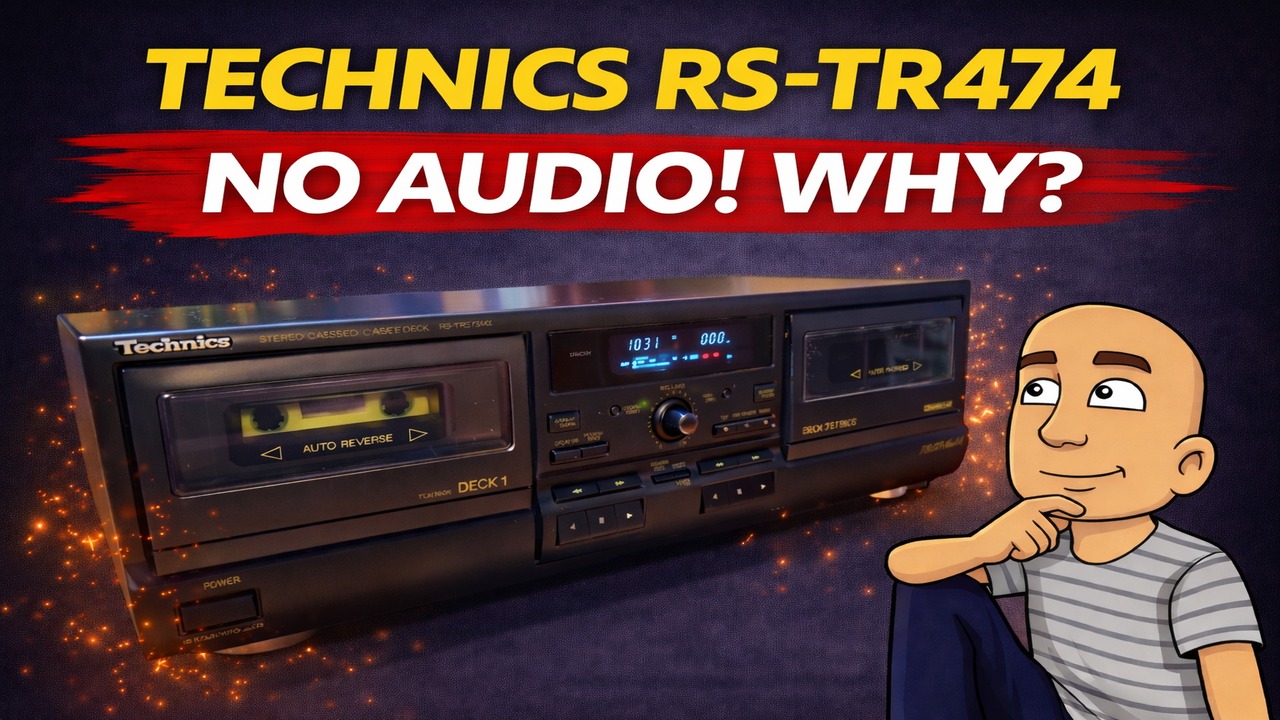
Do you have an old cassette deck that won’t play your favorite tapes? You’re not alone. Many classic tape decks from the 90s and 2000s develop common faults as they age. This guide walks you through the repair of a Technics RS-TR 474 dual cassette deck. We’ll cover how to fix a door that won’t close and a complete loss of audio output. If you’re interested in saving vintage electronics, this step-by-step repair story is for you.
The Two Main Problems with the Technics Deck
When the Technics RS-TR 474 was first powered on, it had two clear issues. The first was a loading problem. The tape door would not close properly. The second was a complete loss of audio. When a test tape was played, there was no sound at all—not even tape hiss.
These problems meant the deck was unusable. The repair process would need to address both the mechanical issue and the electrical fault.
Diagnosing and Fixing the Loading Mechanism
The tape door opened on its own and refused to stay closed. This is a common sign of a mechanical failure. The door did not travel its full path. Because of this, it could not activate a small internal micro switch. This switch tells the deck the door is shut.
Upon initial inspection, nothing inside the deck seemed to be catching or blocking the door. The problem appeared to be with the motor or mechanism that moves the door.
Finding the Faulty Part
After opening the deck’s case, a visual check revealed the issue. A small piece of plastic was out of place. This plastic slider helps guide the door into the closed position. It was stuck and felt “rock hard” when pressed.
A gentle push on this slider made it click back into its correct position. Once it was fixed, it slid all the way down to the micro switch. The door then closed without any issue. This simple fix solved the first major problem.
However, the deck still had no audio output. The mechanical repair was complete, but the main fault remained.
Troubleshooting the Complete Loss of Audio
With the door now working, the next step was to find the electrical fault. A tape deck with absolutely no sound often has a problem in the preamp circuit. This circuit boosts the tiny signal from the tape head so you can hear it.
In other Technics decks from this era, a common culprit is a small failed resistor. This resistor can stop the entire preamp from working.
Accessing the Circuit Board
The Technics RS-TR 474 is not easy to work on. Unlike some brands, the main board is soldered directly to the motors. To access the back of the circuit board, the entire mechanism had to be removed.
The repair process involved several steps:
- Removing the front panel by taking out screws and releasing plastic tabs.
- Lifting out the entire tape mechanism assembly.
- Desoldering motor connections and an edge connector to free the main board.
Only after completing these steps could the back of the circuit board be inspected for faulty parts.
Identifying and Replacing the Bad Components
On the back of the board, two specific resistors were identified as likely failures. These were known to cause this exact “no audio” problem in similar Technics models like the RS-TR 373.
Using a multimeter to test them confirmed the diagnosis. Both resistors should have shown a small resistance value (18 and 27 ohms). Instead, they tested as open circuit. This means they had failed and blocked the audio signal path.
The old resistors were removed. New resistors of the correct values were soldered into their places. This is a precise job that requires a steady hand and good soldering skills.
After replacing the resistors, the entire deck was carefully reassembled. This meant soldering the motors back onto the board and putting all the screws and panels back in place.
The Final Test and Successful Repair
With the deck reassembled, it was time for the moment of truth. A test tape was inserted into the now-functional door. Upon pressing play, the VU meters sprang to life, bouncing with the music’s signal.
Sound was restored. The repair was a complete success. By fixing a simple mechanical slider and replacing two failed resistors, a vintage tape deck was saved.
Key Takeaways for Vintage Tape Deck Repair
Fixing old electronics can be rewarding. It keeps gear out of landfills and preserves a piece of technology history. This repair on the Technics RS-TR 474 highlights two very common issues.
First, mechanical parts like plastic sliders and gears can wear out or get stuck. A visual inspection and gentle manipulation can often solve these problems.
Second, small electronic components like resistors can fail over time. They are inexpensive to replace, but finding them requires systematic troubleshooting. Having a basic multimeter is essential for this.
If you are attempting a similar repair, remember these points:
- Work safely. Always unplug the device before opening it.
- Take pictures. Photograph each step of disassembly so you know how to put everything back.
- Be patient. These repairs require careful attention to detail.
Do you have an old cassette deck or stereo component gathering dust? With some patience and basic tools, you might be able to bring it back to life. Share your own repair stories or questions in the comments below