
Is the Ampapa D1 Mini Amp More Than Just a Light Show?
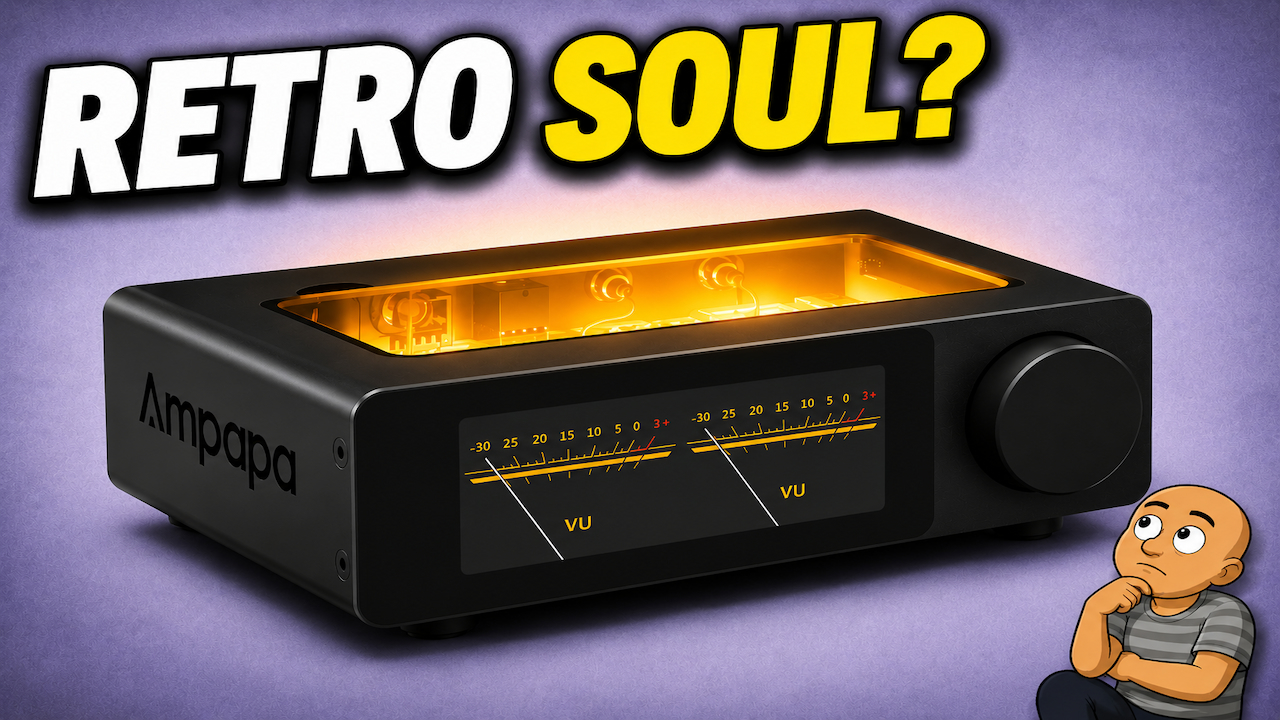
In the budget audio world, you often have to choose. You can get raw power or useful features. You rarely get both. A new amplifier aims to change that. The D1 mini amplifier looks flashy with its custom lights and glass top. It could be written off as a gimmick. But hidden inside is serious hardware. It includes a powerful TPA 3255 amplifier chip and a rare subwoofer control. This review looks past the lights. We test if this is a true hi-fi component for your desk or just a pricey decoration.
First Impressions: Design and Build
The D1 makes a strong visual statement. It doesn’t look like a typical black metal box. The top is a clear magnetic glass window. Underneath, you can see the circuit board and chips. Ambient lighting wraps the unit. This makes it look more like a piece of modern tech than just an amplifier.
The front panel has a high-contrast LCD screen. It works as a digital VU meter. The graphics move quickly with your music. You can change the meter’s style with the front knob. The case feels solid. A clever detail is the brand logo on the side. It is cut into the metal and acts as part of the ventilation system.
The Glass Top and Op-Amp Swapping
The magnetic glass top is a key feature. It is not just for looks. It gives you instant access to the amplifier’s operational amplifiers, or “op amps.” These small chips shape the sound. Swapping them can change the audio signature.
Want a warmer sound? Drop in some premium op amps. Prefer ultra-neutral clarity? Try OPA 828 S chips. You can change them in seconds without any tools. This is a feature usually found in much more expensive gear.
Important note: The amplifier can get warm during use. The design uses copper in the circuit board to manage heat. You should never stack anything on top of the glass window. Always allow for proper airflow.
Key Features That Stand Out
Most budget amplifiers remove features to save money. The D1 adds them. It is packed with functions you don’t expect at this price.
- Full Remote Control: You get a remote to adjust volume, change inputs, and more from your chair.
- Bass and Treble Controls: Adjust the sound by plus or minus 10 decibels. Fine-tune it for your room or music taste.
- Multiple Inputs: It has standard RCA plugs for most audio sources. It also has balanced 6.35mm TRS inputs for professional gear.
- Quality Speaker Terminals: The gold-plated terminals accept thick speaker wire or banana plugs.
The Game-Changing Feature: The Highpass Filter Dial
This is the biggest reason to consider the D1. On the back, there is a small dial labeled as a highpass filter. You can adjust it from 30 Hz to 200 Hz.
What does this do?
If you use a powered subwoofer in a 2.1 system, this dial is essential. It cuts the low bass frequencies going to your main speakers. Your desktop speakers then focus only on midrange and high sounds. Your subwoofer handles all the deep bass.
This makes your entire system sound cleaner and more powerful. It prevents bass “muddiness” from your main speakers. A dedicated highpass filter is a rare and massively useful feature for a desktop amp.
Sound Performance and Power
Good features mean nothing if the sound is poor. So how does the D1 perform?
The amplifier delivers a clean, neutral, and uncolored sound. It does not add its own “flavor.” This means your speakers’ true character comes through. The bass is tight and well-controlled. Mid-range vocals are clear and detailed without becoming harsh or fatiguing.
It has plenty of power. The D1 can drive up to 120 watts per channel into a 4-ohm load. This is enough for most bookshelf or desktop speakers. It easily handled a test with Canton in-wall speakers and a KEF subwoofer.
Points to Consider
No product is perfect. There are two small points to note.
- Turn-On Pop: With highly sensitive speakers, you might hear a small “pop” when you power the amp on.
- Background Hiss: In a very quiet room, if you sit right next to your speakers, you may hear a faint background hiss.
For most users in a normal listening environment, these will not be an issue. They are common traits in many class D amplifiers at this price.
Who Should Buy the D1 Amplifier?
The budget amp market is full of simple, powerful “metal bricks.” They offer maximum wattage for minimum money. If that is your only goal, you can save some cash and buy one of those.
The D1 is for a different user.
Buy the D1 if you want an amplifier that lives on your desk as a centerpiece. Choose it if you value features and flexibility over just raw power. This amp is for you if:
- You run a 2.1 system with a subwoofer and need a highpass filter.
- You like to tweak and upgrade components easily.
- You want the convenience of a remote control and tone adjustments.
- You believe your gear should look as good as it sounds.
Final Verdict
The D1 mini amplifier punches far above its price tag. It takes the excellent TPA 3255 amplifier chip and builds a complete system around it. You get pro-level features like op-amp swapping and subwoofer management.
It is a brilliant and fun piece of kit. The lights and glass top are not just a gimmick. They are part of a thoughtful design. This amplifier proves you don’t have to choose between power, features, and style. You can have all three.
Ready to build your perfect desktop audio system? Start by finding great speakers that match your taste. Then, an amplifier like the D1 can bring it all together with clarity and control.